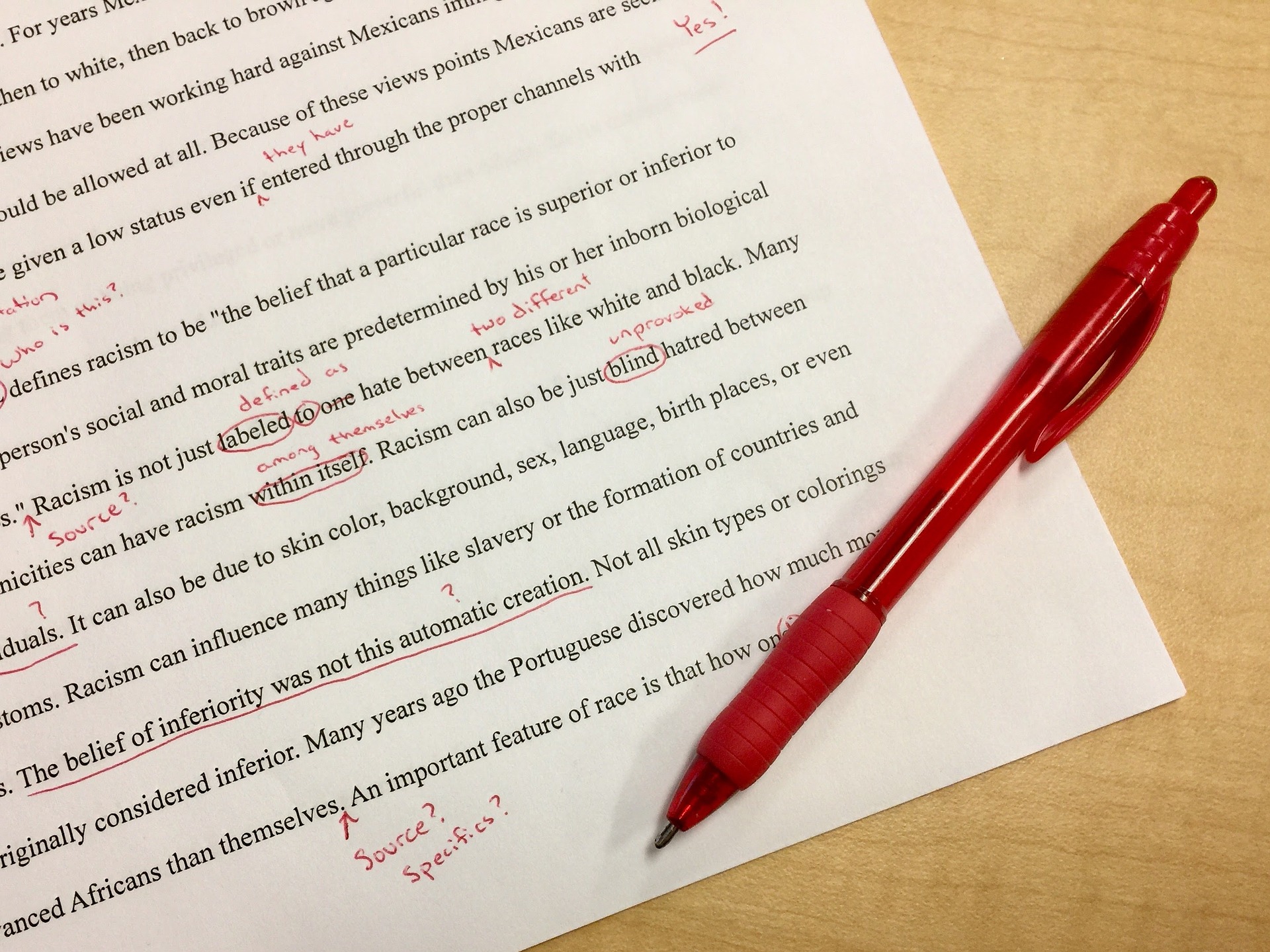
"The tasks that an editor performs can be
grouped broadly into three levels: substantive editing, copyediting, and proofreading.
A comprehensive edit involves all three levels of edit."
A Short Definition Of Each Level Of Editing
Substantive editing
Substantive editing (sometimes called structural or content editing) aims to ensure that the structure, content, language, style, and presentation of the document are suitable for its intended purpose and readership.
Copyediting
Copyediting aims to achieve accuracy, clarity, and consistency in a document. It does not involve significant rewriting, providing a single authorial voice, or tailoring text to a specific audience – these belong to a substantive edit.
Proofreading
Proofreading (usually called this but sometimes known as verification editing) involves checking that the document is ready to be published. It includes making sure that all elements of the document are included, and are in the proper order, all amendments have been inserted, the house or other set style has been followed, and all spelling or punctuation errors have been deleted.
“We know what we are, but know not what we may be.”
William Shakespeare
All 3 are Essential
“All of these levels of edit are essential in producing a high-quality publication, whether on paper or onscreen. They are performed at different times in the publication process and are not necessarily performed only once.
The three levels usually overlap to some degree; an editor hired to do a copyedit is quite likely also to perform some of the tasks that are typically associated with a substantive edit.”